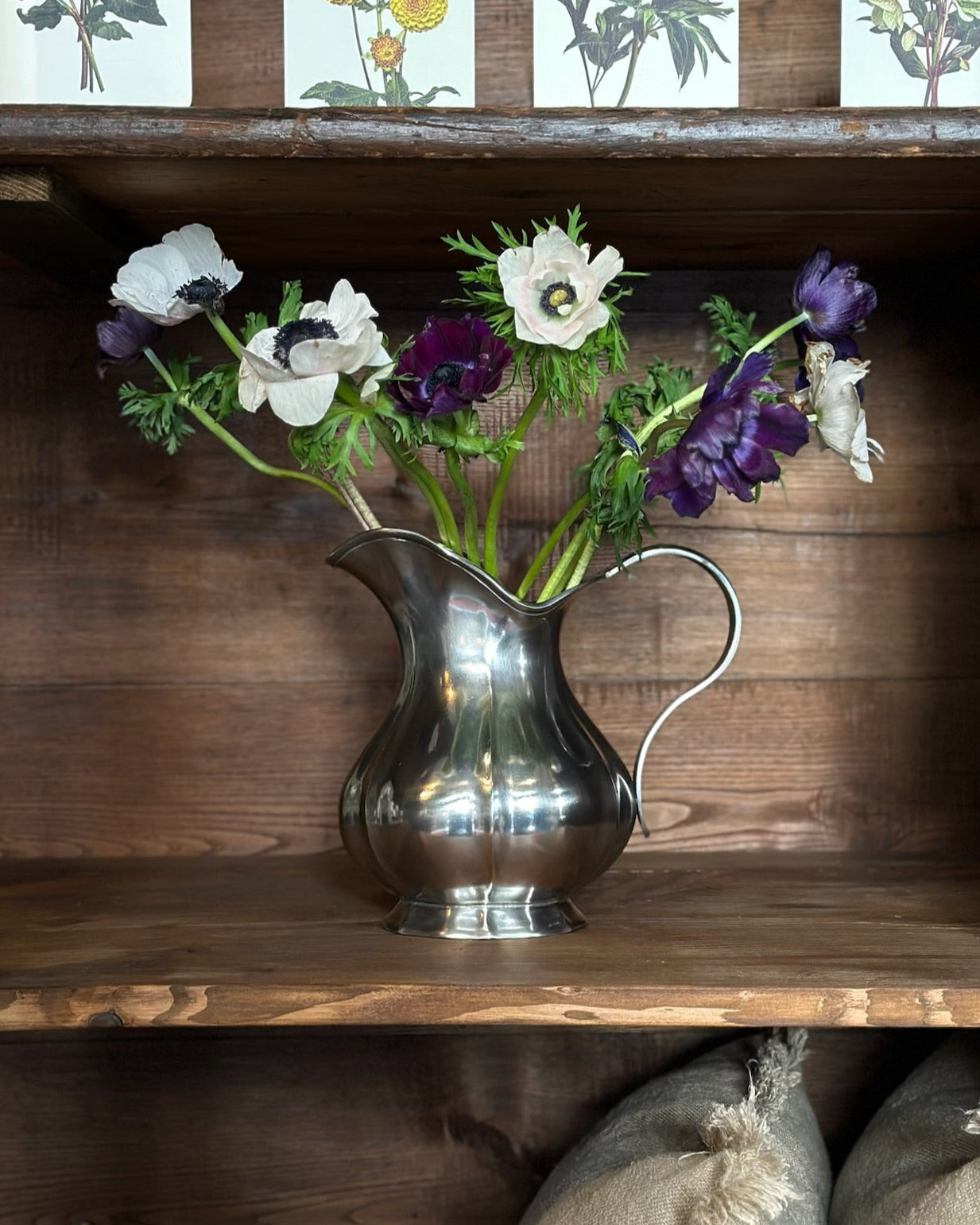


'Siracusa' Pitcher in Pewter by Cosi Tabellini
'Siracusa' Pitcher in Pewter by Cosi Tabellini
Couldn't load pickup availability
This solid-cast pewter pitcher, both architecturally sober and profoundly elegant, transcends functional tableware to become a sculptural statement piece. Equally compelling as a vessel for seasonal botanicals or as a standalone object of contemplation, the Siracusa embodies the refined restraint that distinguishes museum-quality design from mere decoration.
Hand-cast by master pewterers in Lombardy, each pitcher is individually finished to museum standards. The material itself - a tin-based alloy where tin ranks as the fourth most precious metal globally, after platinum, gold, and silver - carries centuries of prestige. Lead-free and food-safe by contemporary standards, yet honoring the metallurgical traditions that made pewter the preferred medium of European nobility and ecclesiastical craftsmen from the 16th century onward.
The Siracusa's cultural pedigree extends beyond craft: its form appeared in the celebrated Italian film "Ferdinando e Carolina," anchoring it within the visual language of refined Italian cinema and design heritage. At 23 centimeters in height with substantial weight and presence, this pitcher is engineered for permanence. It will not diminish with use; rather, it will develop a deepening patina that speaks to its authenticity and longevity.
This is the category of object that passes between generations - a piece acquired not as trend-responsive décor, but as an investment in enduring beauty and uncompromising craftsmanship.
Height 23cm
Metal (Pewter)
ABOUT COSI TABELLINI PEWTER
Cosi Tabellini offers a world-renowned range of hand-crafted pewter and ceramics that has gravitas and simple beauty that assures quality, longevity and good taste. Influenced by Cosi Tabellini's Italian roots, the range combines historic craftsmanship and integrity in a contemporary form, complementing the most traditional as well as the most modern of homes.
All Cosi Tabellini pewter is reassuringly lead-free, food-safe and approved by both the EU and US FDA, and hand-crafted by artisans in Lombardy, Northern Italy.
Pewter, less expensive than silver, but just as striking and beautiful, is thought to have been first made in the Bronze Age, with bronze and pewter being related alloys. Pewter is mostly made up of tin, with a small amount of copper (and antimony), while bronze is mostly made of copper, with a small amount of tin. Metallurgists have speculated that pewter could have been invented when the quantities of metal in the alloy were reversed, either by accident or design.
Tin is the fourth most precious metal today after platinum, gold and silver, and pewter has long been prized as an alternative to silver.
The 16th & 17th Centuries were the Golden Age of pewter, with pewter being the chief component of tableware and liturgical objects universally used across Europe, such as plates and candlesticks. The art of casting had become so sophisticated that truly beautiful pieces could be achieved, especially hollowware (tableware such as creamers, tea pots and tureens) coinciding with the craze, at that time, for new-fangled beverages, such as coffee & tea, as well as carafes and tankards, alongside the age-old staples of wine and ale. Pewterware became prized not just for its utilitarian purposes, but for its decorative beauty and as works of art.
Free of traces of lead, by law, since the 1970s, many pewter workshops have kept the forms of traditional styles that go back generations, since the moulds where the alloys were fused were costly to replace and therefore handed down from generation-to-generation by the craftsman. However, as a fantastically versatile material, pewter workshops, depending upon the skills of the pewterers within, are able to produce innovative and elegant designs, marrying the heritage of pewter, using the traditional value of craftsmanship, with a freshness of 21st Century design, which allows the ancient material of pewter to hold its own in contemporary times.
The 'Siracusa' Pitcher stands as a masterwork of Italian pewter craftsmanship, hand-cast by artisans in Lombardy using techniques refined over centuries. This is not merely a vessel—it is an heirloom-quality piece that bridges the Golden Age of pewter with contemporary design sensibility. Crafted from lead-free, food-safe pewter—an alloy where tin, the fourth most precious metal after platinum, gold, and silver, commands both rarity and enduring value—each Siracusa pitcher is individually cast and finished to exacting standards. The sober, elegant proportions and refined silhouette reflect the sophisticated restraint that defines Cosi Tabellini's design philosophy, making it equally at home displaying seasonal flowers, serving wine, or standing as a sculptural accent on a shelf. At 23cm in height, the pitcher's substantial presence and substantial weight speak to its construction: solid, durable, and built to outlast trends and generations. Its appearance in the celebrated film "Ferdinando e Carolina" underscores its cultural resonance within Italian design heritage. This is investment-grade tableware—the kind of piece collectors and design enthusiasts seek precisely because it combines historical gravitas with timeless beauty, food-safe functionality with gallery-worthy aesthetics, and the assurance that it will only deepen in character with age and use.
Share