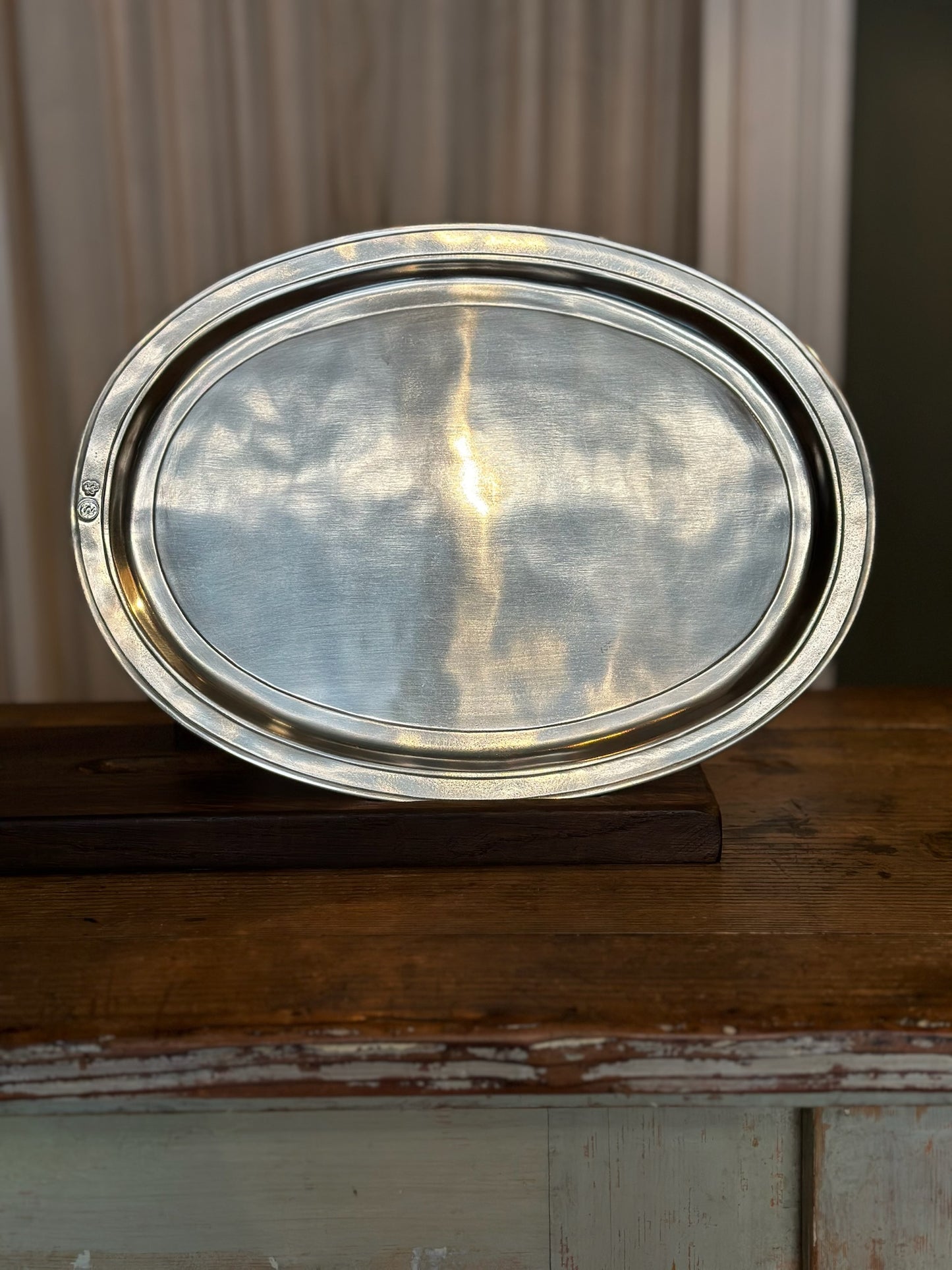
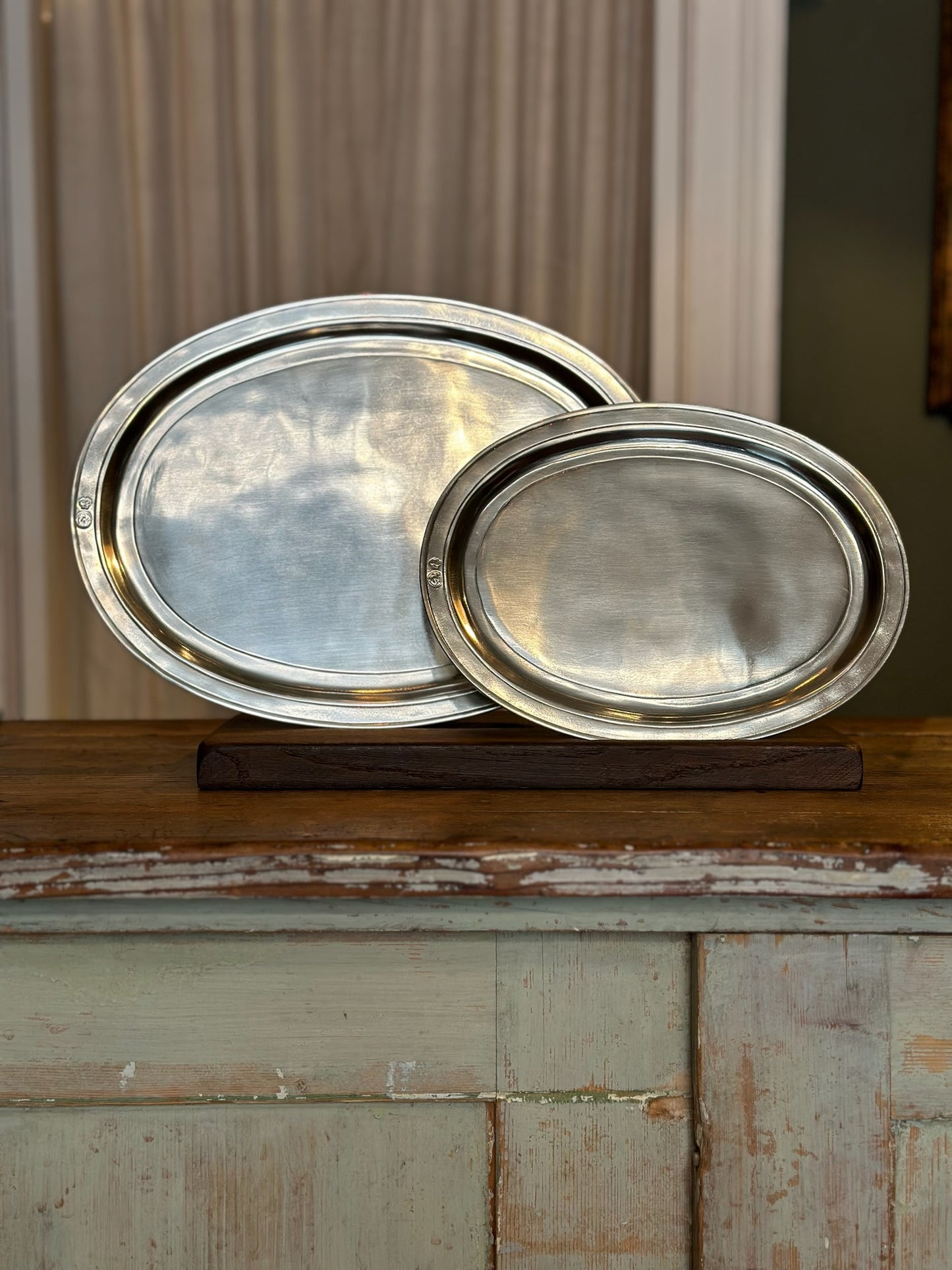
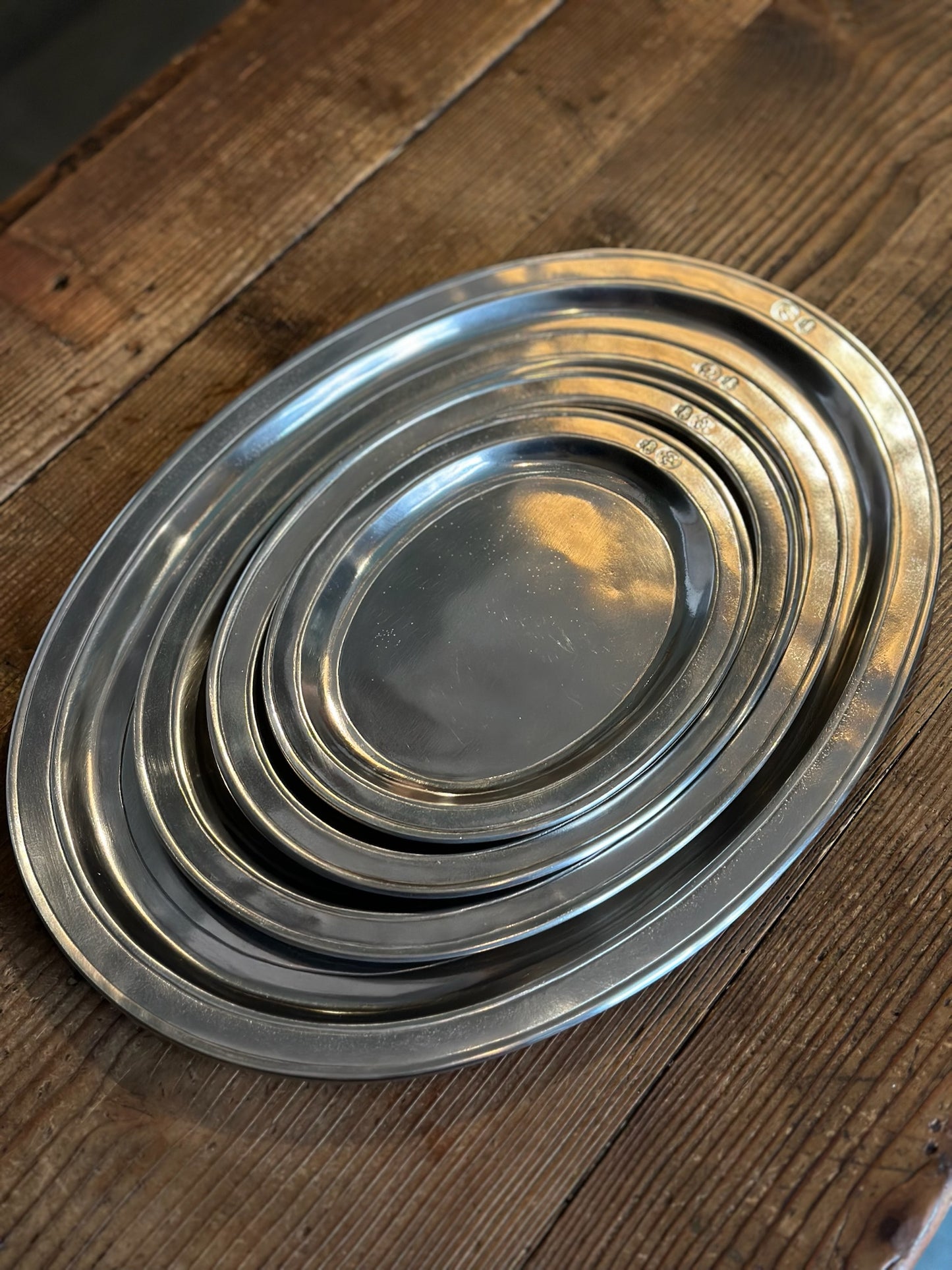
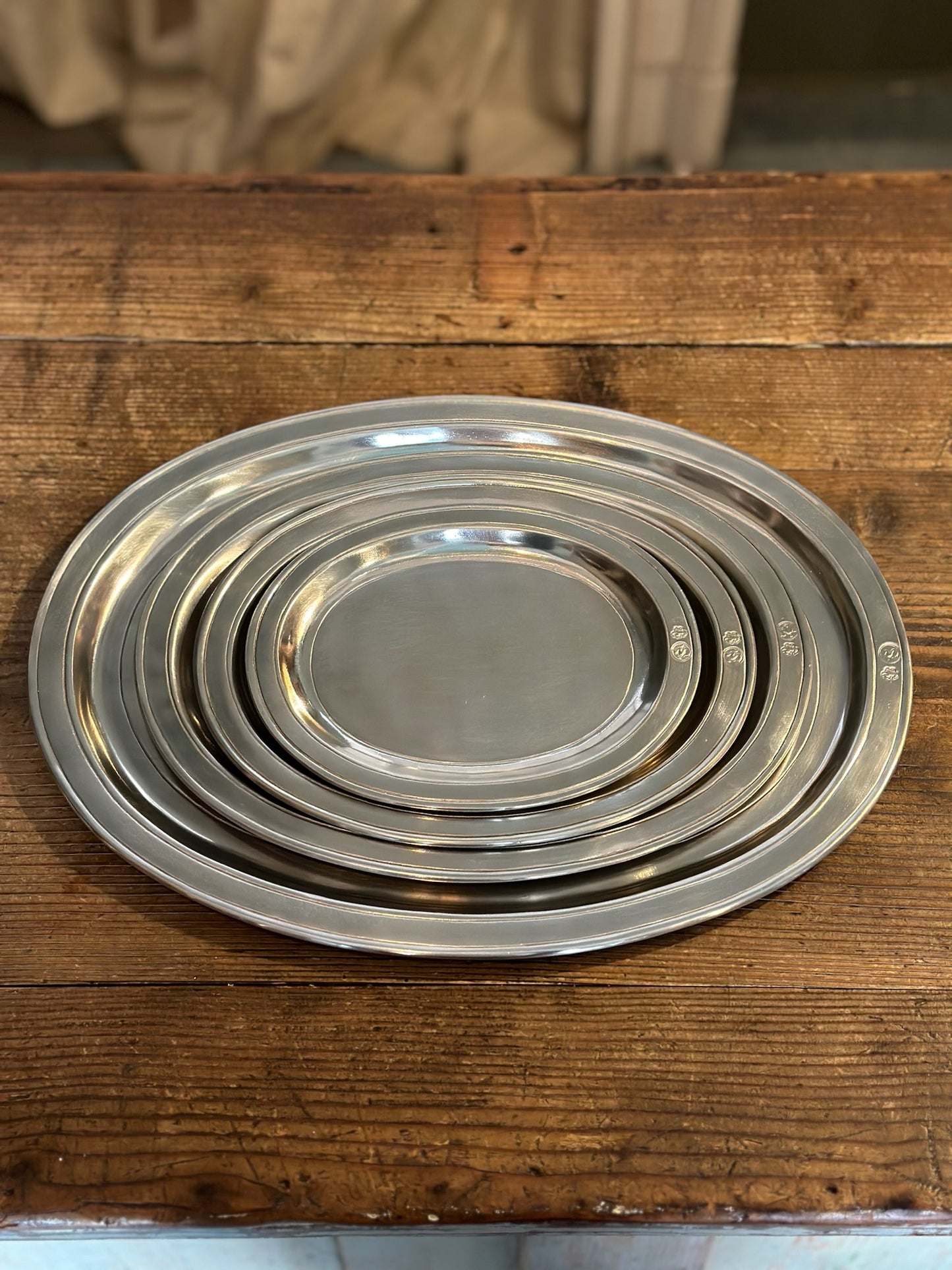
'Orvieto' Oval Platter in Pewter by Cosi Tabellini - 38cm X 28cm
'Orvieto' Oval Platter in Pewter by Cosi Tabellini - 38cm X 28cm
Couldn't load pickup availability
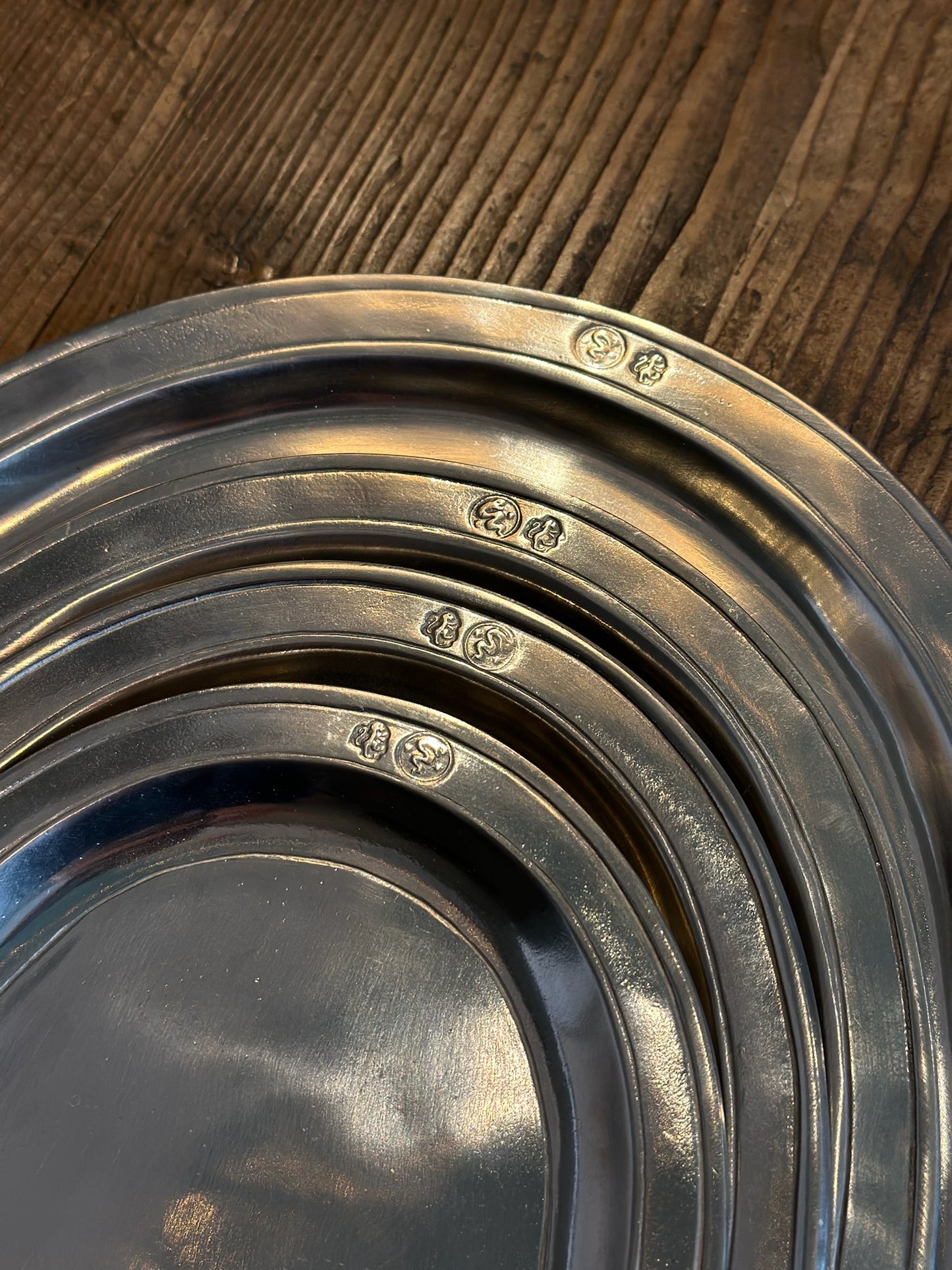
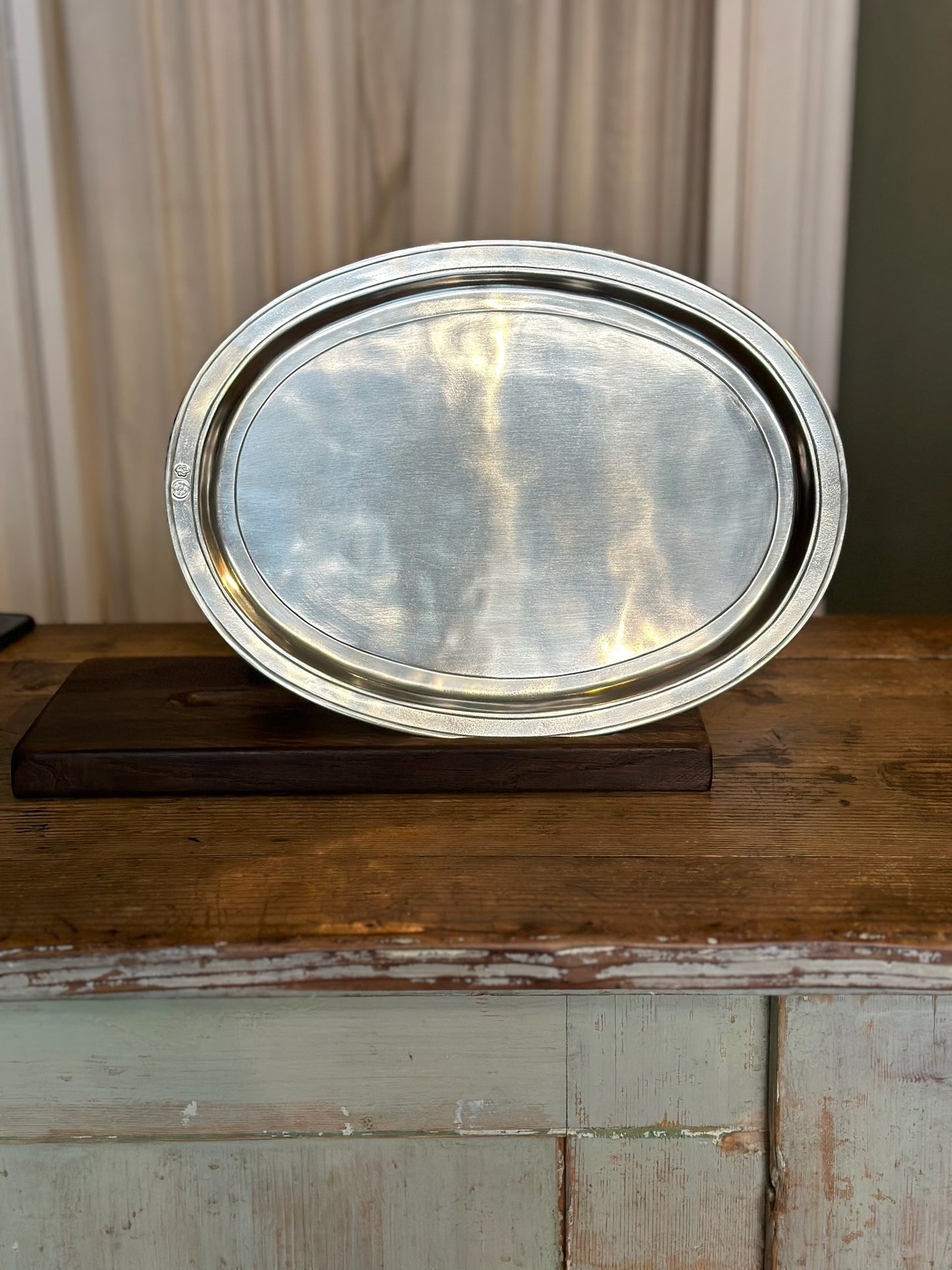
Elegant oval pewter platter with refined proportions and timeless design, meticulously handcrafted in Italy by master pewterers at Cosi Tabellini.
Measuring 38cm × 28cm, this substantial piece commands presence on any table or sideboard. Cosi Tabellini's pewter represents the pinnacle of Italian metalcraft - a material prized since the Renaissance for its lustrous beauty and enduring quality.
Each platter is cast using traditional techniques refined over generations, combining heritage craftsmanship with contemporary sensibility. The result is a functional work of art that elevates everyday dining and entertaining. Crafted from lead-free, food-safe pewter in Lombardy, Northern Italy, this platter meets rigorous EU and US FDA standards. Tin-based with copper and antimony, pewter offers the visual richness of silver at a more accessible investment. Its versatility makes it equally at home as a serving piece, decorative display, or collector's object—a piece designed to be passed down and treasured for decades.
The 'Orvieto' platter exemplifies why pewter has remained a symbol of refined taste across centuries. Durable, beautiful, and authentically Italian, it speaks to those who value substance, craft, and timeless design.
ABOUT COSI TABELLINI PEWTER
Cosi Tabellini offers a world-renowned range of hand-crafted pewter and ceramics that has gravitas and simple beauty that assures quality, longevity and good taste. Influenced by Cosi Tabellini's Italian roots, the range combines historic craftsmanship and integrity in a contemporary form, complementing the most traditional as well as the most modern of homes.
All Cosi Tabellini pewter is reassuringly lead-free, food-safe and approved by both the EU and US FDA, and hand-crafted by artisans in Lombardy, Northern Italy.
Pewter, less expensive than silver, but just as striking and beautiful, is thought to have been first made in the Bronze Age, with bronze and pewter being related alloys. Pewter is mostly made up of tin, with a small amount of copper (and antimony), while bronze is mostly made of copper, with a small amount of tin. Metallurgists have speculated that pewter could have been invented when the quantities of metal in the alloy were reversed, either by accident or design.
Tin is the fourth most precious metal today after platinum, gold and silver, and pewter has long been prized as an alternative to silver.
The 16th & 17th Centuries were the Golden Age of pewter, with pewter being the chief component of tableware and liturgical objects universally used across Europe, such as plates and candlesticks. The art of casting had become so sophisticated that truly beautiful pieces could be achieved, especially hollowware (tableware such as creamers, tea pots and tureens) coinciding with the craze, at that time, for new-fangled beverages, such as coffee & tea, as well as carafes and tankards, alongside the age-old staples of wine and ale. Pewterware became prized not just for its utilitarian purposes, but for its decorative beauty and as works of art.
Free of traces of lead, by law, since the 1970s, many pewter workshops have kept the forms of traditional styles that go back generations, since the moulds where the alloys were fused were costly to replace and therefore handed down from generation-to-generation by the craftsman. However, as a fantastically versatile material, pewter workshops, depending upon the skills of the pewterers within, are able to produce innovative and elegant designs, marrying the heritage of pewter, using the traditional value of craftsmanship, with a freshness of 21st Century design, which allows the ancient material of pewter to hold its own in contemporary times.
Share